Switching Perspective on the What-Ifs

Switching Perspective on the What-Ifs

~ by Dee DiGioia

I’m a “what-if” person.

I have been all my life. Most of it is the anxiety-driven catastrophic-thinking kind. The kind that starts with one small worry and, if I let it, turns into a full down-hill spiral: what if this goes wrong, and then what if that happens, and then what if …?

Anxiety has a way of narrating the worst version of the future as if it’s already decided. It’s actually a primitive survival mechanism hard-wired into the brain as an internal alarm system. Your brain uses the imagination to simulate future worst-case scenarios, anticipating potential problems, threats, or harm so you can avoid danger or prepare physically or emotionally for a negative outcome.

An overactive amygdala—the brain’s threat-detection center—misinterprets safe situations as dangerous, triggering a fight-or-flight response. This chronic activation floods the body with stress hormones and impairs the prefrontal cortex (the brain’s rational, calming center), directly causing the racing heart, hypervigilance, and persistent fear associated with anxiety disorders.

Chronic anxiety often stems from a combination of genetic, environmental, and social factors. It is not tied to specific events but seems to permeate every aspect of life, manifesting as generalized worry, excessive fear, and intrusive thoughts.

Symptoms can be managed. It used to hold me back a lot but has eased up over the years with awareness and choosing strategies to stop the spiral. For years, I taught mindfulness based social-emotional learning programs to children, including how to recognize and cope with anxiety and “what-ifs.” Teaching them helped me as well!

Even though I taught it, it doesn’t mean I don’t experience anxiety anymore. It is something I manage. Even as recently as a few weeks ago I started spiraling fast while preparing for the Live Oak Music Festival. I was trying to manage my feelings about first time camping there and first time volunteering at the event for 4 days. The “what-ifs” came flooding in. When I don’t catch myself on the downward spiral, then awareness arises from the reactions from others. They look at me with furrowed brows of confusion as if wondering “why is that such a big worry?” I then am reminded to thank my amygdala for trying to protect me but I’m taking the steering wheel now! None of my catastrophic worst-case scenarios came to fruition. I had an amazing time!

As such, in the last few years, I became aware of what-if thoughts spiraling in a reverse direction…

New Imaginings

Four years ago I bought my first set of crystal sound bowls to help manage my anxieties at a stressful time — a breakup of a long-term relationship and having to return to full time work as a speech-language therapist in the public schools. It was a stressful job that burned me out and I was trying to escape but instead I had to return to it in order to afford my rent that I was now having to pay for on my own.

But “what-ifs” aren’t always catastrophic thinking. I may be a “what-if” person but I also have a creative imagination. I began to imagine new potential and possibilities. I loved how the sound bowls helped me feel, so the what-ifs began flooding in. What if I could learn and study more about sound and healing? What if I could have this be a core offering for Mindful Kindful YOUniversity? What if I used my salary to invest in training and in acquiring more instruments so that I could eventually leave the career in the schools once and for all?

The “what-ifs” became fuel for hope for a new future and I began sharing “sound journeys” with others. And others also love how it helps them feel!

That’s not to say the anxious thoughts didn’t and don’t show up from time to time. What if I’m not good enough? What if people don’t come? What if I fail?

But those are merely whispers that I don’t give much credence to — I let them drift on by like clouds in the sky. They no longer stick like velcro. They slide off like teflon!

Similarly, the rise of our facilitated mindful drumming circles came out of creative imagination. I used drums with my special needs students in schools and started learning different ways to use rhythm and drums to positively impact their behavioral challenges. In so doing, once again I loved how it helped me to feel and deal with the stresses at work.

Three years ago, on my birthday (July 18), I told my partner I wanted to do a drum circle. Neither of us had ever even been to one. No training, no experience, no plan — just an impulse, or perhaps a calling, that felt too big to ignore.

At the end of that circle, people enthusiastically asked, “Can we do this again?” They, too, loved how it made them feel. We laughed, we created, we played on buckets and make-shift drums.

That question planted more what-ifs — imagining the best-case possibilities! What if I explored training as a drumming facilitator? What if this could be a type of sound healing experience that people can actually participate in? What if I purchased enough drums to eliminate any barriers to participating?

Of course the overprotective amygdala sounds the alarm from time to time — What if you look like a fool? What if people think I am “not a drummer” because I don’t know cultural rhythms or “how to play”? What if…? What if…?

I let those intrusive thoughts blow on by like leaves in the wind.

“There is freedom waiting for you, On the breezes of the sky, And you ask, “What if I fall?” Oh, but my darling, What if you fly?”

— Erin Hanson

The Question That Runs Backward

In the past year or two I began to reflect differently. Instead of potential doom thoughts — “What if this goes wrong?” or “What if I fail?” — I muse about “What if I had never started at all?” “What if I never left my career in the school system?”

Oh, how life would be so different!

As a speech-language therapist in the school system for years, it was literally chipping away at my mental and physical health. The caseload and workload was not sustainable, and the job was slowly stealing something from me — my passion and joie de vivre. Burnout isn’t a metaphor. One day, at school, my heart went so haywire I had to call 911. It was the final straw — the realization that the school system was going to keep taking from me until there was nothing left to give, so it was up to me to make a change. To fly the coop. To imagine the possibilities and potential for a completely different way of serving others, which I had begun paving the way for while still teaching.

What if I had never purchased a crystal sound bowl set? What if I hadn’t invited people to my first “sound bath”?

I think about the ripples I would not have made — the people I would not have met, the shifts I would not have witnessed together in sound.

What if I had never said “let’s do a drum circle” on my birthday?

I would not be facilitating at senior living centers — witnessing laughter, the spirit of play, and their genuine appreciation for participating in such a unique activity. I would not know the particular quiet that comes over a community circle who came in carrying grief, or loneliness, or even curiosity about trying something new — and left a little lighter.

Working with children for all those years taught me something I didn’t know I’d need later: the value of play, of laughter, of being okay with a perceived mistake. It turns out that lesson wasn’t just for the classroom. It was preparing me for a room full of adults who felt worried about “how to” drum for the first time.

It’s the same imaginative muscle the what-ifs use. I just turned it around. And when I turned it around, what I found wasn’t fear — it was gratitude.

What If I Waited Until I Was “Good”?

This is the one I have to be honest about, because it’s still unresolved.

I never grew up around cultural drumming rhythms. I’ve tried, a few times, with a teacher — and it scrambles my brain. It doesn’t come easily to me the way it seems to for others. And the what-if here is a quieter, more persistent one: what if I’m not qualified to facilitate this? What if I “should” wait until I’m actually “good” at it?

I haven’t fully answered that what-if. I don’t think I need to.

What I’ve come to instead is this: our circles were never about getting the rhythm “right.” They’re about creative play — about a room full of people picking up a drum, some for the first time, and finding out that there is no wrong way to make good sounding rhythms together. If I had waited to feel qualified by someone else’s standard, I never would have started, and neither would most of the people who now call our circles the highlight of their month.

I still don’t know the traditional rhythms well. I’ve made peace with that — not by resolving it, but by realizing it was never the point.

Naming It, So You Can Use It

I don’t think I’m unusual in having a what-if brain. I think most people who feel deeply also imagine vividly — and that imagination can just as easily terrify you as it can show you what you would have missed.

Here’s what I’ve learned to do with mine:

      • Notice the spiral early. The what-ifs almost always start small. Catching the first step down is easier than climbing back up from the bottom.
      • Ask what you’d be waiting for. If the what-if is “what if I’m not ready” — ask what “ready” would even look like. Sometimes there’s no such finish line.
      • Flip the question. Instead of what if this goes wrong, try what if I never tried at all? Let yourself actually picture that absence — the ripples that wouldn’t exist.
      • Let unresolved things stay unresolved. Not every what-if needs an answer. Some just need to stop being the reason you don’t start.
      • Remember: worst-case rarely arrives. Most of the time, the outcome is neutral. Sometimes — more often than we let ourselves believe — it’s the best thing that ever happened to us.

Four or five years ago, I was spiraling toward a depression I recognized from other chapters of my life. Leaving my “career” in special education was a leap of faith that may be one of the best decisions of my life. Today, I’m living the best version of my life I didn’t know how to imagine back then — one built on sound, rhythm, connection, healing, and showing other people that they’re capable of things they don’t yet believe they’re capable of. I am flying high!

If there’s a what-if quietly holding you back from something — a circle you haven’t joined, a thing you haven’t tried, a version of yourself you haven’t let out yet — I hope you’ll ask the other question too.

What if you never started? And what if, instead, you did?


~ In gratitude, Dee DiGioia, Mindful Kindful YOUniversity

The Power of Sound for Co-Regulation in the Perinatal Period

The Power of Sound for Co-Regulation in the Perinatal Period

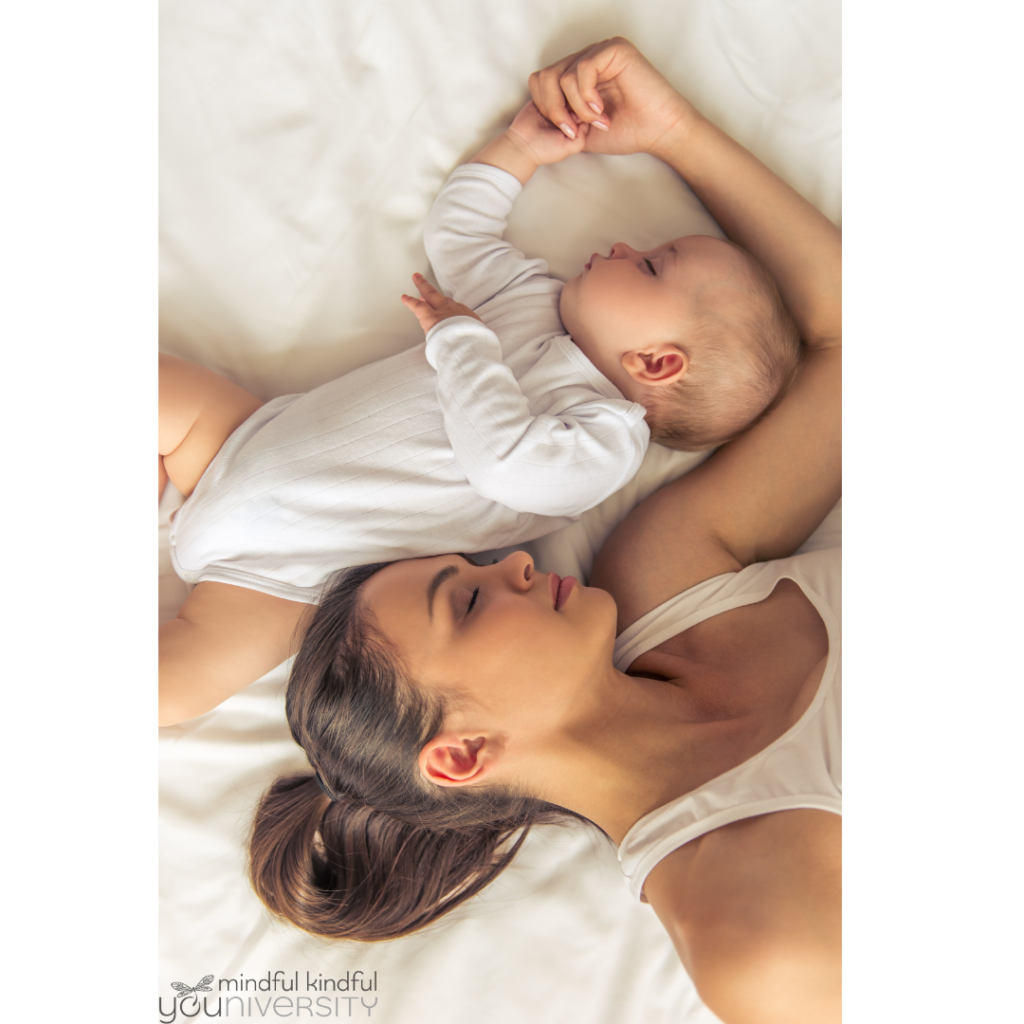
From the moment of conception, a mother and baby are in constant energetic and physiological communication. This intimate bond is a dance of rhythms—heartbeats, breath, hormones, emotions, and nervous system states. Sound becomes an extraordinary bridge in this dance, offering a shared vibration that nourishes both mother and child.

Co-Regulation Begins in the Womb

      • The baby senses and responds to the mother’s emotional state through biochemical and vibrational cues. Her stress or calm directly affects the baby’s developing nervous system.

      • Gentle, soothing sounds—especially those offered in a sound journey—help activate the mother’s parasympathetic nervous system (the “rest and digest” state), creating a calming environment for both.

      • When a mother listens to grounding tones like crystal singing bowls, ocean drums, or a steady heartbeat-like rhythm, her body settles, and this calm is biologically shared with her baby.

Sound as a Co-regulation Tool

      • Pre-natal benefits: Sound Journey sessions promote emotional regulation, lower cortisol levels, reduce anxiety, and increase oxytocin. These states create a womb environment rich in safety and connection.

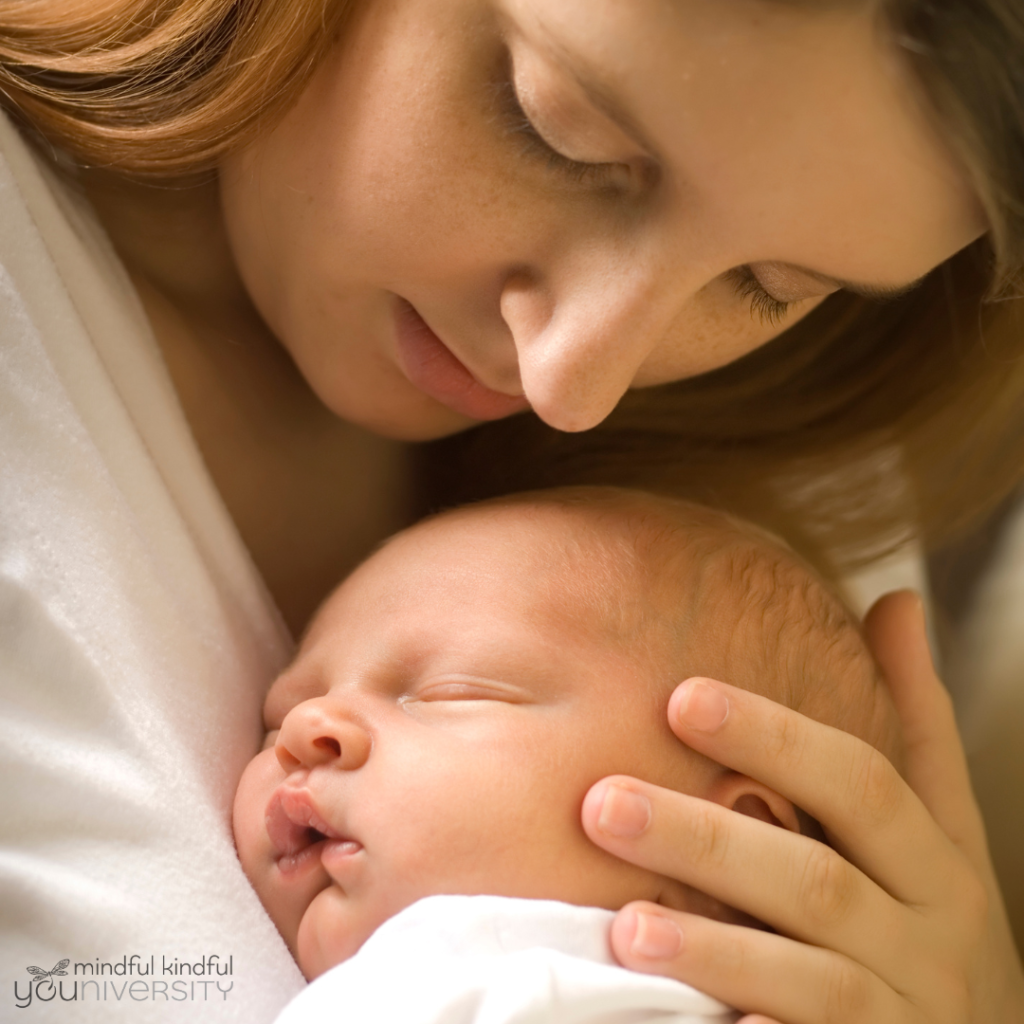
      • Post-natal support: Newborns continue to co-regulate through the mother’s presence, voice, breath, and touch. Sound journeys can help a mother reset her own nervous system, especially during the intense early postpartum period.

      • Bonding through vibration: Repeated exposure to certain sounds or lullabies in utero can become familiar and comforting to a newborn post-birth, offering continuity and grounding.

Emotional & Energetic Resonance

A relaxed, emotionally attuned mother sends signals of safety, rhythm, and love—and sound is a direct pathway to amplify these states. Whether through harmonic resonance or intentional silence between sounds, a Sound Journey creates space for inner coherence that radiates outward to baby.


Perinatal Sound Journey Experiences

In April we began a weekly offering for classes alternating between locations in Los Osos and San Luis Obispo. Check our schedule for any updates. You can also schedule private sessions with Dee.

Join us for a soothing sound journey created especially for parents (including expectant parents), partners, and caregivers with babies up to one year old. This is a nourishing space for deep relaxation, bonding, and well-being for both you and your precious little one.

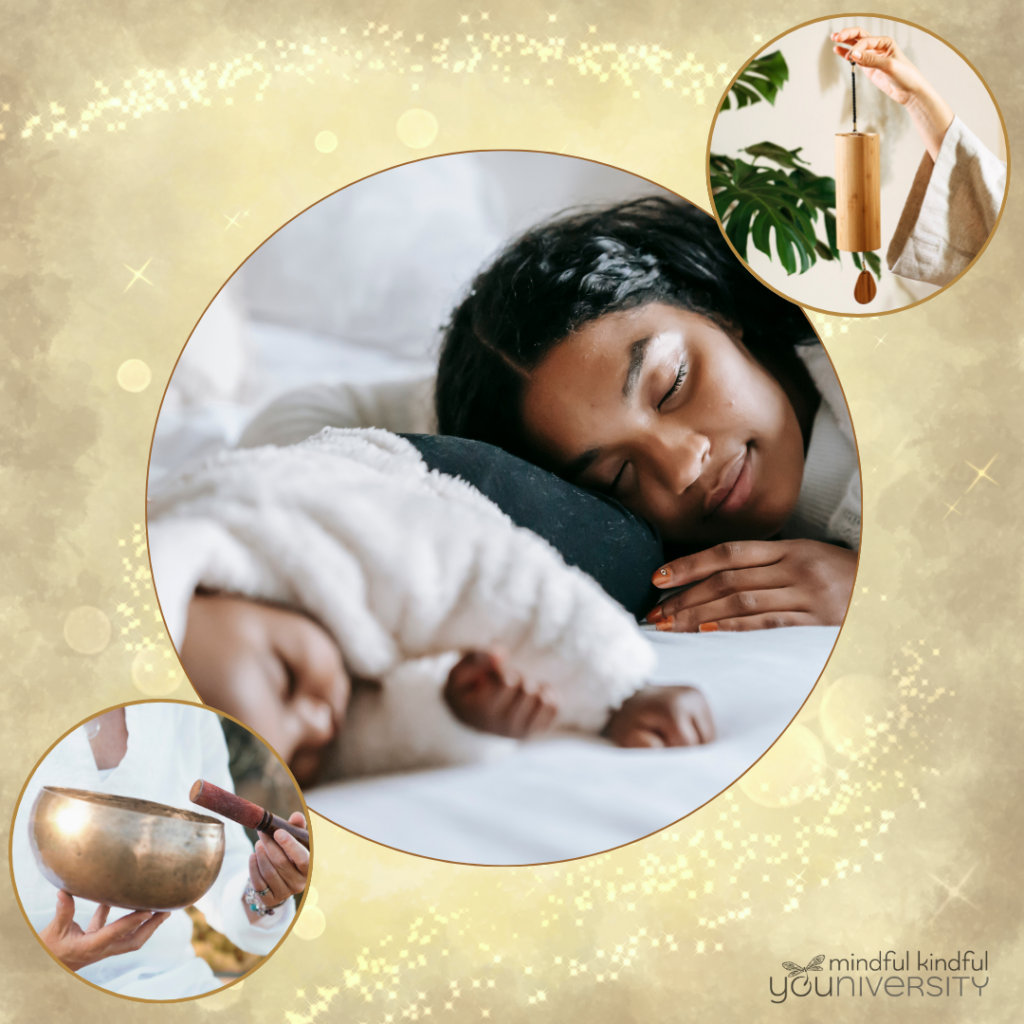
Commonly known as sound baths, these experiences feature gentle vibrations and calming harmonic tones from instruments such as crystal singing bowls, chimes, and soft rhythmic percussion. Loud or intensely vibrating sounds are avoided to ensure a nurturing and safe environment for sensitive little ears and nervous systems.

You’ll also be guided through light breathwork and vocal toning to support nervous system regulation, emotional connection, as well as stimulates cognitive and language development.

This is a comfortable, flexible space created with your needs in mind. Feel free to tend to your baby however needed—nurse, feed, change a diaper, walk, rock, or simply be present. You’re among others doing the same, with full permission to just be.

As babies become more mobile and curious, the experience may shift to include gentle movement and playful sound exploration.

Benefits of Sweet Lullabies Sound Journeys:

  • Soothing Vibrations for Babies – Infants are highly receptive to sound, and gentle tones mimic the comforting sensations of the womb, supporting relaxation and sleep.
  • Emotional Connection – Shared moments of sound and stillness strengthen the bond between caregivers and babies, fostering deeper attachment.
  • Relaxation for Caregivers – Parenting can be overwhelming; this experience offers a chance to pause, breathe, and reset, reducing stress and creating a more peaceful home environment.
  • Improved Sleep Cycles – The calming effects of sound can enhance sleep patterns for both babies and caregivers.
  • Regulated Breathing & Energy – Gentle rhythms and breathwork help caregivers feel grounded and present, while babies absorb the soothing energy around them.

***As with any wellness practice during pregnancy, we encourage listening to your body and consulting with your healthcare provider if you have any concerns.***

As a holistic practitioner, my mission is to illuminate pathways to enhanced health and well-being through transformative experiences, including Sound Immersion Journeys, Facilitated Drumming Experiences, Song Circles, and Mindfulness-based Nature Retreats. Each offering creates a sacred space for nurturing and nourishing body, mind, and spirit while promoting therapeutic and holistic health benefits across mental, physical, and social dimensions of well-being, including stress relief. By sharing the sacred wisdom and evidence-based practices in my well-being offerings, I aim to do my part to help foster communities where mindfulness, kindfulness, and harmony flow freely, nurturing the well-being of all. More About Dee.

Public and private events offered throughout San Luis Obispo County.

Flowing and Growing Through Life

Flowing and Growing Through Life

The process of becoming

Once again, we come full circle to the summer solstice—a time to reflect on cherished memories, and to nurture hopes and dreams for this season of the year and for this season of your life.

Nature, in its seamless cycles, offers us profound lessons on transformation. The transition from one season to another, the rhythm of day turning into night, and the calming of storms all illustrate that change is not an abrupt event but a continuous process. Each element in nature plays its part in an ongoing dance of transformation. A fallen leaf decomposes and enriches the soil, which in turn nourishes new plants. Similarly, a pine cone can either nurture wildlife or give rise to a new tree. These natural processes highlight that what seems like an end is merely a step in the journey of becoming.

Personal Evolution and Self-Discovery In our own lives, we frequently encounter moments that compel us to reflect on who we are and who we are becoming. Challenges, milestones, and pivotal events serve as catalysts for introspection and growth. These experiences often prompt us to question our identity and our path.

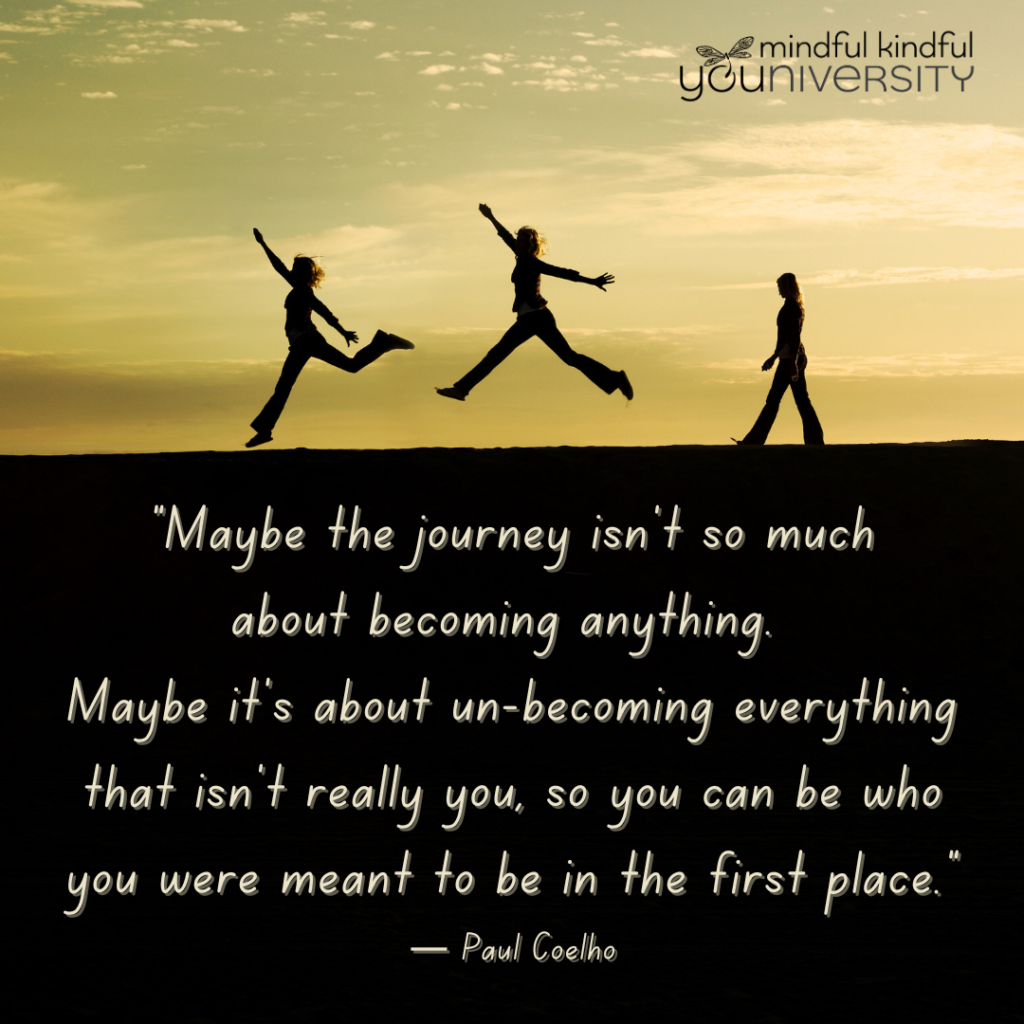
The Concept of Un-Becoming  Paul Coehlo, author of “The Alchemist” wrote, “Maybe the journey isn’t so much about becoming anything. Maybe it’s about un-becoming everything that isn’t really you, so you can be who you were meant to be in the first place.” The idea of “un-becoming” suggests shedding layers of ourselves that are not aligned with our true essence. It is about letting go of societal expectations, conditioned behaviors, and false identities that obscure our true nature. By un-becoming, we create space to rediscover our authentic selves.

Embracing True Nature Discovering or rediscovering our true nature involves deep introspection and a willingness to confront and release what no longer serves us. It requires us to tune into our inner voice and values, and to live in alignment with our authentic self. This journey of becoming involves showing up in life in a way that reflects our true nature, be it in health, relationships, or other life circumstances.

Practical Steps for Transformation

  1. Mindfulness and Reflection: Regular practices of mindfulness and reflection can help us stay connected with our true selves. Journaling, meditation, and spending time in nature are effective ways to cultivate awareness.
  2. Letting Go: Identify and release beliefs, habits, and patterns that do not resonate with your true self. This can be a gradual process, requiring patience and self-compassion.
  3. Embracing Change: View challenges and changes as opportunities for growth. Embrace them with an open mind and heart, trusting in the process of transformation.
  4. Nurturing Relationships: Surround yourself with people who support and inspire your journey of becoming. Positive relationships can provide encouragement and perspective.
  5. Living Authentically: Make choices that align with your values and true nature. This might involve setting boundaries, pursuing passions, or taking risks that feel right for you.
  6. Sound and Connection at the YOUniversity: Our bodies, like finely tuned instruments, resonate with the vibrations of life around us. By aligning ourselves with these natural frequencies, we can achieve a state of harmony and balance. Modern science and ancient wisdom both emphasize the importance of this alignment, highlighting techniques that transform energy, promote wellness, and foster deep connections. At the YOUniversity, we offer unique experiences that merge modern science and ancient wisdom to transform energy and promote wellness, including: Sound Journeys,  “Joyful Rhythms” Drum Circles, Song Circles, and Nature Retreats.

By embracing the concept of un-becoming, we open ourselves to the endless possibilities of who we can become. Just as nature transforms, so do we, continually evolving and becoming more aligned with our true selves.

BeYOUtiful!

Check out our upcoming events to support you throughout each season of your life!

Offered year-round in Los Osos, CA and various locations throughout San Luis Obispo County. Visitors to the beautiful central coast of CA are welcome!

Public and custom private events! Inquire about hosting an event!

See ALL of our events on our CALENDAR page 

~Dee DiGioia, Founder of “Mindful Kindful YOUniversity”  / Sound Healing Practitioner / Drum Circle Facilitator / Mindfulness & Life Skills Guide for Well-being through Nature Connectedness Retreats


~ Additional Inspirations ~

Everything in the universe changes energy all the time. What falls apart becomes source. It’s an exchange. There’s no judgment. There’s no positive or negative. It’s just energy transforming.

Let Nature and the elements support you.

Engage in the practice of releasing dense, heavy energy. Allow the wind to carry it away, let it drift downstream in a river, transform it through the power of fire, or compost it into the earth. In exchange, invite lighter, transformational energy to enter your being. Feel nourished and renewed by this natural process of release and renewal. ~ Dee DiGioia


“What if the task is simply to unfold, to become who you already are in your essential nature: gentle, compassionate and capable of living fully and passionately present?” ~ Oriah Mountain Dreamer


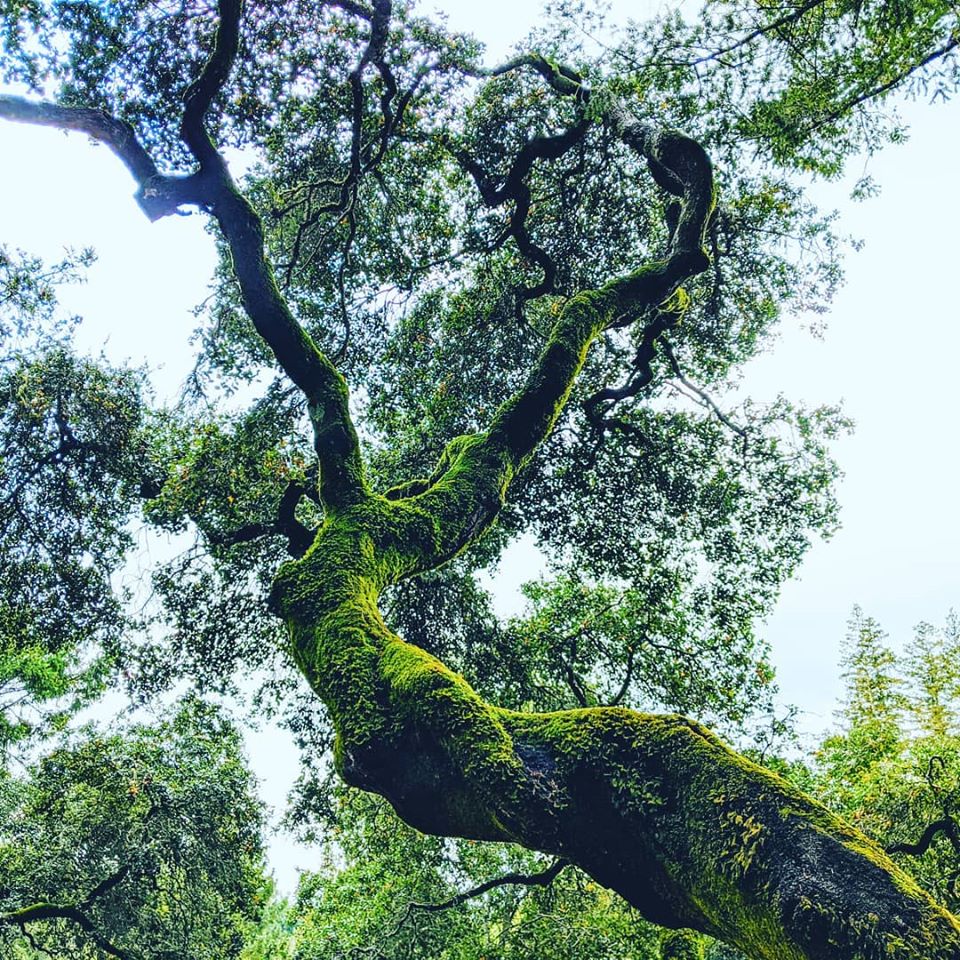
“When you go out into the woods, and you look at trees, you see all these different trees. And some of them are bent, and some of them are straight, and some of them are evergreens, and some of them are whatever. And you look at the tree and you allow it. You see why it is the way it is. You sort of understand that it didn’t get enough light, and so it turned that way. And you don’t get all emotional about it. You just allow it. You appreciate the tree.

The minute you get near humans, you lose all that. And you are constantly saying ‘You are too this, or I’m too this.’ That judgment mind comes in. And so I practice turning people into trees. Which means appreciating them just the way they are.”  ~Ram Dass


“The obstacle in the path becomes the path. Never forget, within every obstacle is an opportunity to improve our condition. Each time, you’ll learn something. Each time, you’ll develop strength, wisdom, and perspective. Each time, a little more of the competition falls away. Until all that is left is you: the best version of YOU.” ~Ryan Holiday


“When all is said and done, life is the real curriculum. Life itself is the real curriculum. And how we are in relationship to this very moment is the real meditation practice.” ~Jon Kabat-Zinn


Social media & sharing icons powered by UltimatelySocial